

In 1948, French film scholar Alexandre Astruc declared what he termed to be “a new avant garde” in cinema—la camera stylo. Translated as “camera pen,” Astruc’s concept suggested that due to certain changes in the film industry, developments in cinematographic technologies, and a rising generation of filmmakers, cinema was developing into a new means of self-expression. Astruc writes of the significance of this development in cinema:
After having been successively a fairground attraction, an amusement analogous to boulevard theatre, or a means of preserving the images of an era, it is gradually becoming a language. By language, I mean a form in which and by which an artist can express his thoughts, however abstract they may be, or translate his obsessions exactly as he does in the contemporary essay or novel.
Astruc’s essay laid the foundation for what would later be called the auteur theory of cinema. Astruc describes how the “artist”—or a film director—wields the “camera stylo” to express their thoughts, emotions, and experiences on screen and thereby gains the status of “auteur.”
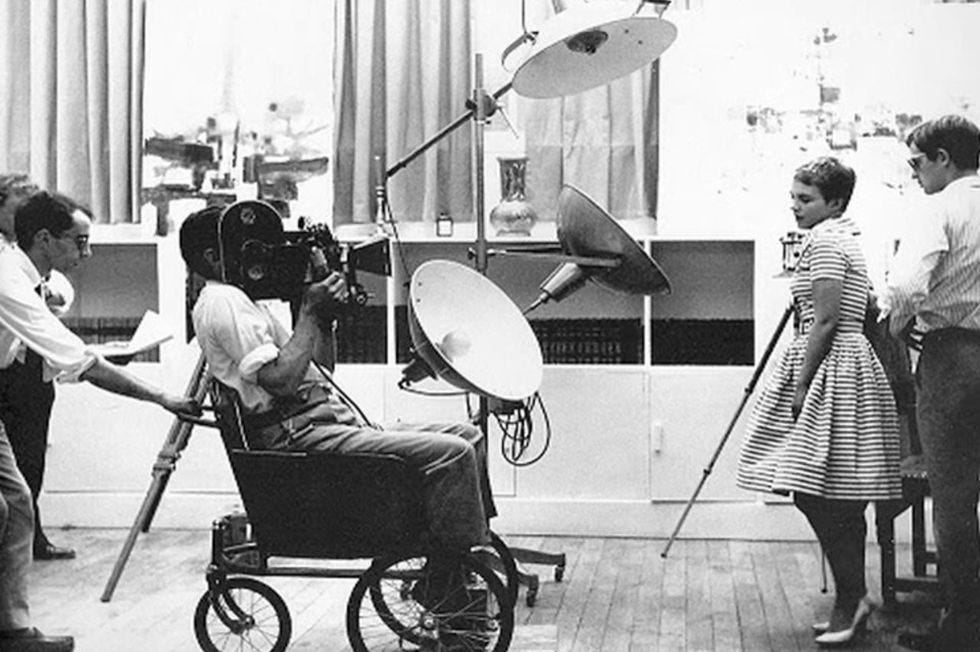
The auteur theory was popularized by the film journal Cahiers du Cinema in which Astruc—along with fellow French film scholars and makers Andre Bazin, Eric Rohmer, Francois Truffaut, and others—engaged with movies as art. The group poured over the cinematic works of filmmakers like Orson Welles, Jean Renoir, Robert Bresson, and even genre directors working in the big studios like John Ford and Howard Hawks, and they identified what they termed to be film artists or “auteurs.”
This was significant because, as Astruc’s quote above suggests, up until this time movies were considered mere entertainment and the success (or failure) of a film was credited to the studio that produced it. This was due in part to the incredible control that movie studios (especially previous to the landmark antitrust case the U.S. vs. Paramount Pictures in 1948) wielded over the industry, controlling the production, distribution, and exhibition of films. But it was also due to a failure of imagination, or perhaps of interpretation. During that time, to think that movies were art—and that a director working within an industry like Hollywood was an artist—was novel, if not controversial.
Later the concept of the auteur was picked up and further developed into a full-fledged theory by American film scholars like Andrew Sarris and Peter Wollen. Sarris, for example, proposed a criterion for identifying an auteur. Organized in three concentric circles, his criterion of value argues that auteurs:
Demonstrate a degree of craftsmanship.
Develop an identifiable personal style.
Exhibit a type of intangible, resonant quality in their films which Sarris describes as “interior meaning.”
The breakup of the Hollywood studios’ monopoly on the film industry in 1948 and the increased accessibility of camera technologies over the next several decades contributed to a system of production that allowed Astruc’s idea of the camera stylo to flourish. This new opportunity for filmmakers to enact their creative visions on screen was demonstrated in the rise of independent, documentary, experimental, indigenous, and other “alternative” cinemas in subsequent decades.
The boom in home video recording technologies in the 1980s and, more recently, the ubiquity of mobile and networked technologies has made video recording and distributing technologies nearly as accessible as pen and paper. In the age of YouTube, Instagram, TikTok, and Twitch, individuals have a greater opportunity than ever to wield their camera to “express [their] thoughts” and “translate [their] obsessions.”
Challenging the Auteur
In response to Sarris’ articulation of the auteur theory, film scholar and critic Pauline Kael wrote multiple scathing critiques of this approach to analyzing film. She argues that the theory is both mystical and inflexible, that it celebrates commercial products over artistic expressions, and, worst of all, that it is immature and misogynist.
Kael asserts that the definition of the author that Sarris draws upon in his formulation of the auteur is one that not only positions the individual as creator and determinant of meaning, but also privileges maleness. And this critique is fair—most of the filmmakers identified as “auteurs” were (and continue to be) men. And since the Enlightenment, the discourse around authorship has very rarely varied from the equation author = individual = man.
Origins of the Author
This conception of art as the creation of an artist, author, or auteur is one that film and media inherited from existing cultural traditions within art history and literary theory. The idea that authors are individuals who express their emotions and communicate their intentions in their artistic work originates in the European Enlightenment of the 1600s.
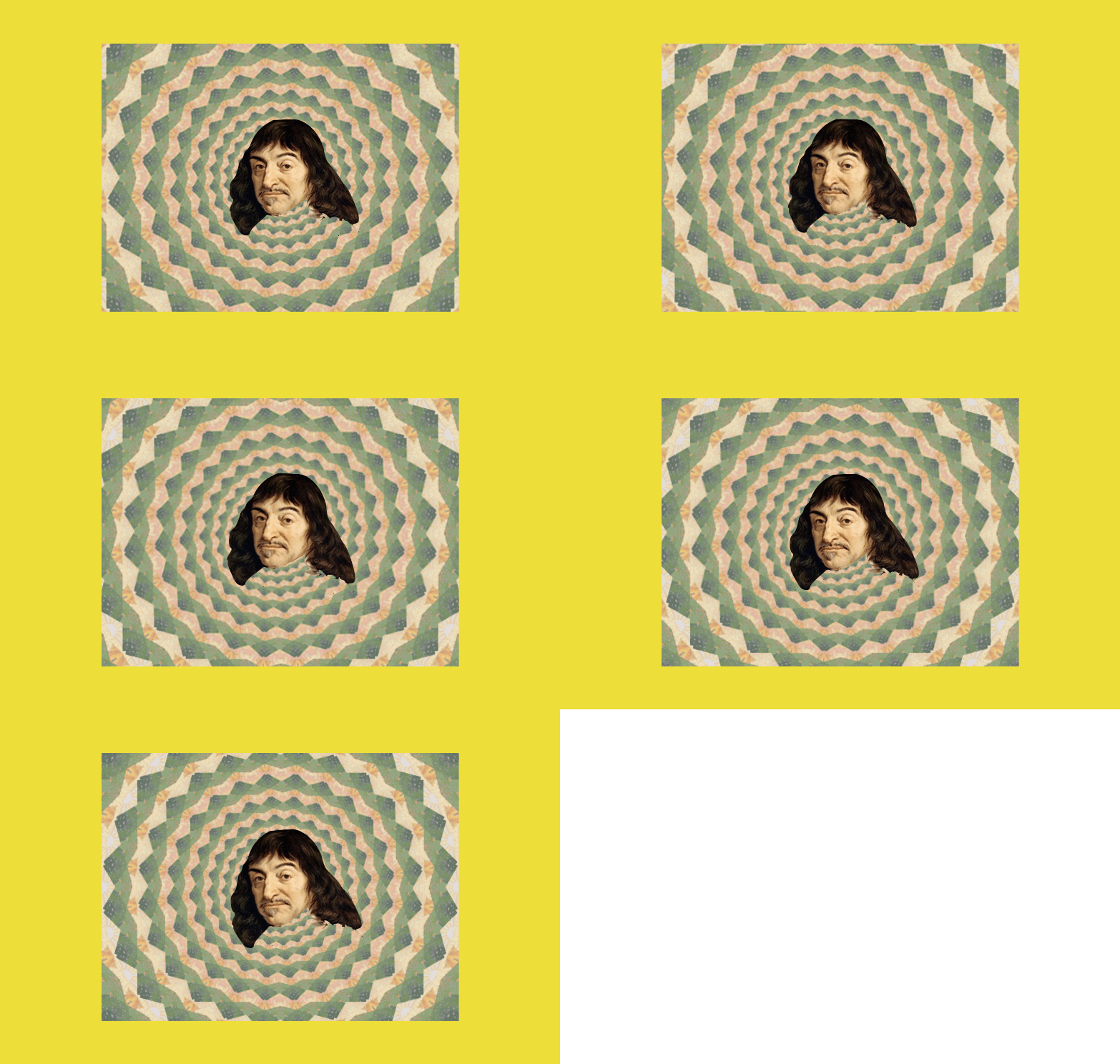
It was in this era that philosopher Rene Descartes famously wrote “I think therefore I am” and introduced the idea of the self as an autonomous, rational being. The new conception of the individual had a massive impact on philosophical discourse as well as art, economics, and politics. Because of this new emphasis on the individual, scholars and critics increasingly understood art through the lens of authorship.
Artists like Michaelangelo, Mozart, and Shakespeare were celebrated for their contributions to the cultural canon. Art—whether drama, painting, literature, or music—was considered the product of an individual’s labor, creative vision, and authorial intention. As a result of this shift toward the self, interpretations of culture began to especially emphasize the author’s motivations as the primary determinant of an artistic work’s meaning.
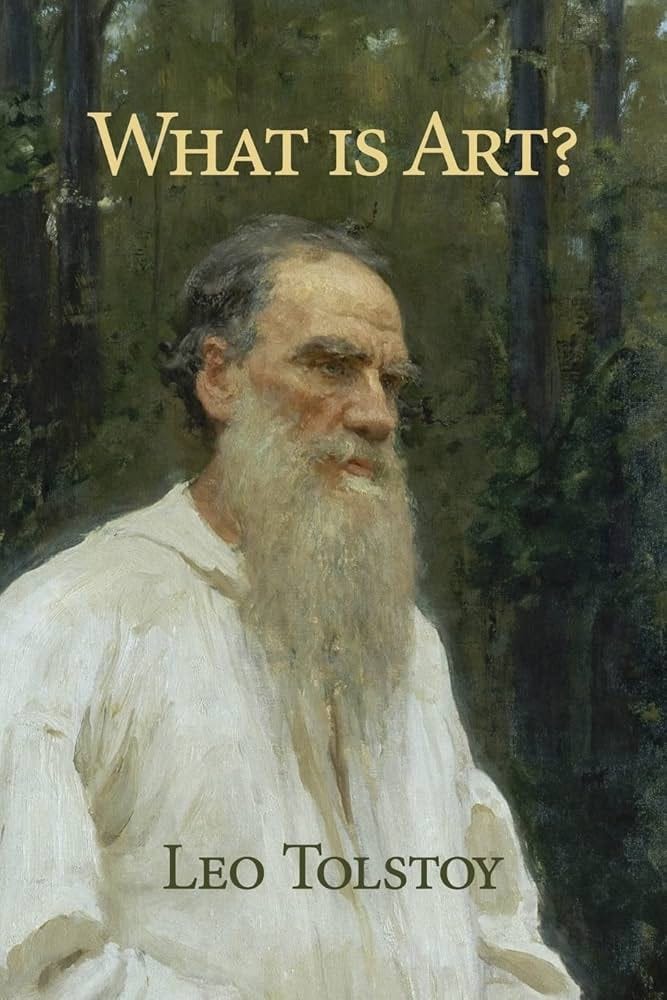
This author-centric perspective—which was among the dominant approaches to interpretive thought for centuries—is effectively voiced by author Leo Tolstoy who in his 1897 book What is Art? writes, “Art begins when one person, with the object of joining another or others to himself in one and the same feeling, expresses that feeling by certain external indications.”
This emphasis on the individual provides the foundation for much of interpretive theory in modernity as well as the development of other aspects of liberal societies, including capitalism and democracy. So, since the Enlightenment, we have chosen to celebrate the self, understanding culture principally as the creations of artists and authors and (even more importantly) understanding ourselves principally as individuals.